
Most beginners fail at lucid dreaming because they treat reality checks as a physical habit rather than a mental one. They mindlessly poke their palm or look at a clock ten times a day, expecting that muscle memory alone will wake them up inside a dream. It won’t.
If you perform a reality check on autopilot in waking life, you will perform it on autopilot in your dream. Your brain will simply simulate the result it expects: the finger will bounce off the palm, the clock will show normal time, and you will continue sleeping.
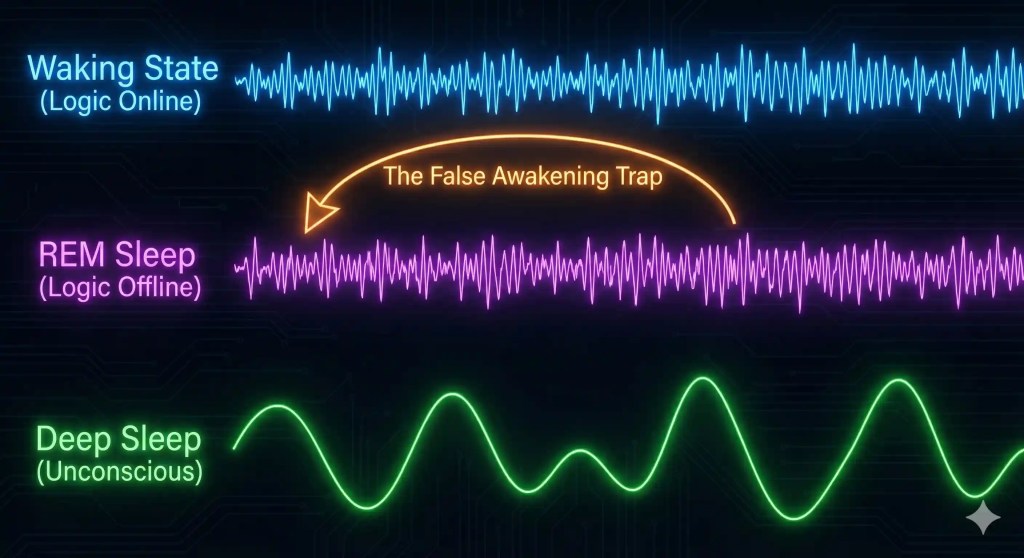
To become lucid, you are not trying to train your body; you are trying to activate a specific part of your brain—the dorsolateral prefrontal cortex. This logic center is normally deactivated during REM sleep, which is why you accept bizarre dream scenarios as real. A proper reality check is a cognitive trigger designed to force this system back online.
Note: You cannot analyze a reality you don’t remember. Before mastering these checks, ensure you have a functional Dream Recall system in place.
The Science: Why Autopilot Reality Checks Don’t Work
The pioneer of scientific lucid dreaming research, Dr. Stephen LaBerge, emphasizes that the physical action of a reality check is secondary to the critical reflection accompanying it.
In his studies at Stanford University, LaBerge demonstrated that lucid dreaming relies heavily on Prospective Memory—the ability to remember to perform an action in the future. However, prospective memory fails if the intention isn’t paired with genuine doubt.
The Simulation Problem
Your brain is a prediction engine. In a dream, it constructs reality based on your expectations.
- If you assume you are awake: Your brain will render a solid wall when you try to push your hand through it.
- If you genuinely doubt reality: The rendering wavers. The wall might become elastic, or your hand might pass through.
This is why mechanical repetition fails. If you check your watch without actually wondering if you are dreaming, your subconscious will simply provide a time (e.g., 12:00). You will look at it, think “Okay, I’m awake,” and miss the opportunity.
To succeed, you must stop the autopilot. Every check requires a moment of genuine mindfulness where you truly consider the possibility that your current experience is a simulation.
Research—specifically a study from the Max Planck Institute—suggests that this moment of reflection is what bridges the gap between the dreaming mind and waking consciousness.
The Best Reality Checks That Rarely Fail
Forget counting your fingers or looking for a spinning top like in Inception. Those are unreliable because your brain is excellent at simulating visual details. If you expect to see five fingers, your brain will render five fingers.
Instead, we want to exploit rendering errors. The dream world is a high-fidelity simulation, but it has limits. It cannot perfectly replicate the laws of physics or maintain complex data stability.
Here are the three most effective reality checks that rely on biological and neurological glitches.
1. The Nose Pinch (The Breathing Check)
Pinching your nose is one of the most widely known reality checks, and for good reason. This technique is extremely reliable. In my experience, it is arguably the best method—and certainly my personal favorite. Its effectiveness comes from the fact that it relies on maybe the most fundamental biological process, breathing. If you pinch your nose in a dream, your real body won’t stop breathing.
- The Action: Pinch your nose tightly shut with your fingers and attempt to breathe in through your nose.
- The Logic: In a dream, your physical body is lying in bed, and your autonomic nervous system is still breathing. While your voluntary muscles are paralyzed, Dr. Stephen LaBerge’s research at Stanford University confirmed that dream respiration corresponds directly to physical respiration. However, your dream avatar is pinching its nose.
- The Realization: The sensation of the physical body overrides the dream simulation. You will feel the air rushing in through your pinched nose. It is a bizarre, impossible sensation that should make you realize you are dreaming.
I like to use the nose pinch method, especially in combination with lucid dreaming techniques like the Wake Back to Bed (WBTB) method.
2. The Finger Through Palm (The Collision Error)
Pushing your finger through your palm is a classic reality check as well. It acts like a collision detection error, similar to a video game character glitching through a wall. In the real world, your finger won’t pass through your palm, but in the dream world, it often does.
- The Action: Take the index finger of your right hand and try to push it through the center of your left palm.
- The Logic: In reality, electromagnetic forces prevent atoms from passing through each other. In a dream, solidity is just a rule your brain enforces based on expectation.
- The Realization: If you genuinely question the solidity of your hand, your finger will often pass straight through your palm, or the palm will feel rubbery and stretch.
- Pro Tip: Don’t just tap it. Push with the intent to go through. If you do this mindlessly, your brain will simulate resistance. You have to expect the finger to go through your palm.
While this technique isn’t always the most reliable—meaning that sometimes in a dream your finger might stop at your palm—it has one huge advantage. This reality check is very easy and unnoticeable to perform during the day on a daily basis. If you are in a crowded café, pinching your nose might be way more awkward than just simply pushing your finger against your palm.

3. The Text Re-Read (The Rendering Lag)
The brain is a creative engine, not a storage device. It struggles to keep static information constant when your attention shifts. Dr. Stephen LaBerge’s research at The Lucidity Institute famously highlighted this phenomenon.
- The Action: Find a piece of text (a street sign, a book, or a digital clock). Read it. Look away. Look back and read it again.
- The Logic: In the physical world, text is static matter. In a dream, it is a fluid simulation generated live by your brain. Since the brain regions responsible for stable working memory are down-regulated during REM sleep, the mind fails to save the specific sequence of text. When you look back, the brain generates a new image instead of retrieving the old one.
- The Glitch: According to LaBerge’s studies, text in dreams changes 75% of the time upon a second look, and 95% of the time upon a third look. The words might scramble, float, or change into hieroglyphs.
This technique is often the most interesting and fun of them all. There are many versions of this check, but they all utilize the same phenomenon: the changing environment. You can look at a phone, the scenery, or any random object. It works with almost anything because your brain effectively has to create the view again every time you look back.
Just remember, don’t look into a mirror, since that’s one of the things you should never do in a lucid dream.
How to Execute a Reality Check for Lucid Dreaming
Most guides tell you what to do, but not how to process it. If you perform a reality check while scrolling your phone or thinking about dinner, you are wasting your time. You are running a script, not debugging the system.
To catch a simulation error, you must pause the simulation. Here is the algorithm for a successful check:
- The “Stop” Command: Physically stop moving. Freeze. If you are walking, stop. If you are typing, stop. This breaks the “autopilot” loop of the brain.
- The Question: Ask yourself: “Am I dreaming?” Do not answer “No” immediately. Look around. Is the lighting weird? Is the silence unnatural? genuinely try to prove that you are currently asleep.
- The Action: Perform the Nose Pinch.
- The Verification: If you can breathe through your pinched nose, do not panic. Stay calm. You have just become lucid.
If you skip step 1 or 2, the physical action (Step 3) will likely return a “false negative” because your brain will hallucinate the sensation of not being able to breathe, just to keep the dream narrative intact.
When to Reality Check: Creating Triggers (Prospective Memory)
Do not set an alarm to remind you to do a reality check every hour. That is lazy and ineffective. It trains you to rely on external alerts, which you won’t have in a dream.
Instead, you need to train your Prospective Memory. This is the cognitive ability to remember to perform an action in the future when a specific cue is encountered. This is exactly what Dr. Stephen LaBerge’s famous MILD technique is based on.
You need personal triggers. And to find those triggers, you need data.
1. The Data-Driven Trigger (Dream Signs)
Go through your journal. Look for recurring themes or “assets” that appear frequently.
- Do you often dream about dogs?
- Do you often dream about being back in school?
- Do you often dream about your childhood home?
These are your Dream Signs. Every time you see a dog or a school building in waking life, perform a Reality Check. By linking the check to the object, you program your brain to trigger the check automatically when that object appears in a dream.
2. The Weirdness Trigger
In waking life, laws of physics are constant. In dreams, they are suggestions. If anything “weird” happens—a flickering light, a déjà vu moment, or a strange noise—do not ignore it. Treat it as a rendering error. Perform a check immediately.
The Common Danger: False Awakenings
There is one specific scenario where reality checks are mandatory: right after you wake up.
A False Awakening is a vivid dream where you dream that you have woken up. You might get out of bed, brush your teeth, and start your day, all while still asleep. This can happen in loops (waking up 5 times in a row), which can lead to the confusion and dissociation I mentioned in my post about Is Lucid Dreaming Dangerous?.
The Golden Rule: Every single time you wake up, perform a Nose Pinch. Make it your first action of the day.
- If you are awake, you just look a bit silly for a second.
- If you are dreaming, you just turned a confusing loop into a high-level lucid dream.
Troubleshooting: “I Did a Check, But Didn’t Become Lucid”
This is the most frustrating experience for a beginner. You look at your hand in a dream, you see 12 fingers, and your dream brain thinks: “Oh, 12 fingers. That’s cool. Anyway…” and you continue dreaming.
Why this happens: Your critical faculty (logic) was too suppressed. You performed the action, but you didn’t have enough mental awareness to process the result.
The Solution: All Day Awareness (ADA) To fix this, you don’t need more checks; you need better checks. Instead of doing a 2-second check, take 10 seconds. Engage your senses. Feel the weight of your clothes. Listen to distant sounds. Ground yourself in the “now” before doing the Nose Pinch. If you practice being “lucid” while awake, you will naturally be lucid while asleep.
Conclusion: Quality Over Quantity
Lucid dreaming is not about spamming reality checks hoping one sticks. It is about hacking your own awareness.
One thoughtful, genuine Nose Pinch is worth more than 50 mindless ones. By using physics-based checks and linking them to your personal dream signs, you are not just hoping for a lucid dream—you are programming one.
Your Next Step: Don’t just read this and scroll away. Stop right now. Look around. Ask yourself: “Is this a simulation?” And then, pinch your nose.
See you in the lucid world. But be cautious—there are 3 Questions You Should Never Ask a Dream Character.


How to Learn Lucid Dreaming? – best resources
🎧 What to read next?
If you want to master lucid dreaming, I recommend starting with the these books. (Transparency: This section contains affiliate links to tools I personally use and trust.)
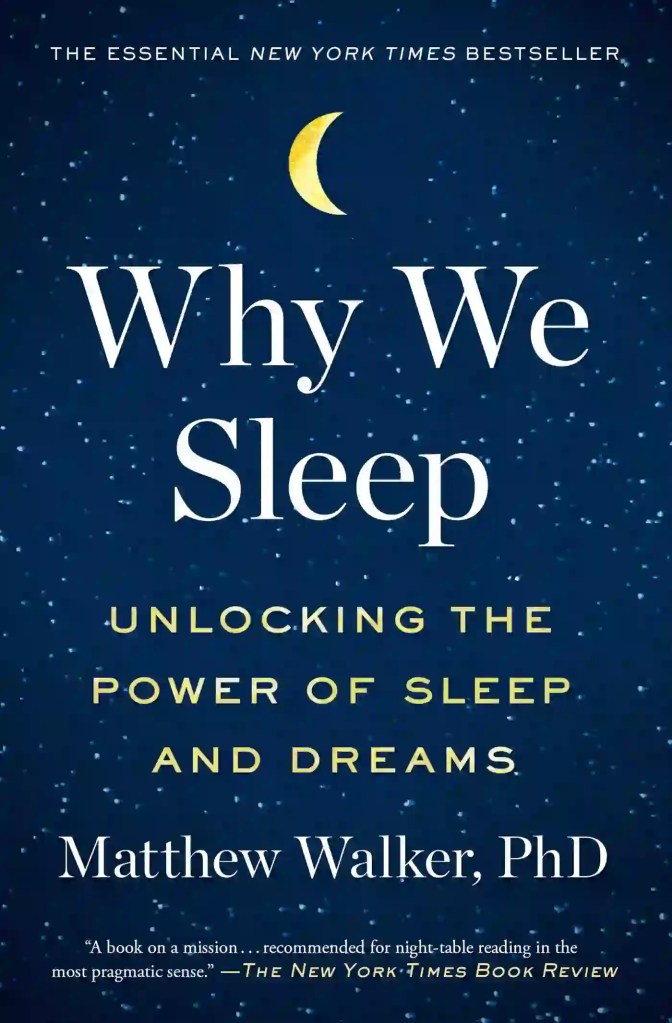
Why We Sleep, Surely the greatest book about sleep!

Exploring the World of Lucid Dreaming, Bible of Lucid Dreaming!
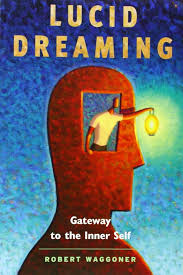
Lucid Dreaming: Gateway to the Inner Self, To become the Lucid Master!
Tip: You can currently get all of these books via this Audible deal (3 months for $0.99/month). It’s almost free too!
✨ The Best Silk Pillowcases and sheets!
- Promeed Official Store: To minimize sensory disturbances during the night, your physical environment must be optimized. Promeed offers premium 6A+ Mulberry silk bedding designed to regulate temperature and reduce friction, ensuring your REM sleep remains as deep and uninterrupted as possible.
 Likely Dreaming | Exploring Dreams & Sleep
Leave a comment