
Are dream characters conscious entities or subconscious projections. Do they know they are in a dream?
When you realize you are dreaming and look at the person standing next to you, a natural question arises: Who exactly am I talking to?
They have emotions, autonomy, and sometimes an unsettling level of intelligence. Biologically, what you are interacting with is one of the brain’s most impressive magic tricks. Understanding the mechanics behind these “entities” transforms them from random background actors into powerful tools for self-discovery.
For me, one of the most interesting aspects is how dream characters act. If they are created by your subconscious, why are they so unpredictable? However, you can’t interact with what you can’t remember, so improving your dream recall is the essential first step.
The Neuroscience: Your Brain’s “NPC Generator”
Most modern neurologists and psychologists view dream characters as internal projections. According to evolutionary theories like the Threat Simulation Theory, your brain is essentially a massive simulation engine running a procedural generation script.

- The Database: To populate the dream world, the brain pulls from a vast library of faces stored in your Fusiform Face Area (the part of the brain responsible for facial recognition). These can be friends, celebrities, or strangers you passed on the street decades ago.
- It is sometimes claimed that every single character in your dreams is a memory of a real person and that you cannot create new faces yourself, but this is not scientifically verified. I’d like to leave that up to your belief, or maybe future research will give us the answer.
- The Split-Self: In this view, every character is a fragmented aspect of the Self. When you argue with a dream character, your brain is running both sides of the conversation simultaneously. You are the puppeteer and the audience at the same time.
- The Function: These characters personify your abstract thoughts. A feeling of anxiety might manifest as a chasing wolf; a feeling of confidence might appear as an old mentor.
The “Uncanny Valley” Effect: Why Characters Reject Lucidity
A common report among lucid dreamers is the hostile or bizarre reaction when they tell a character: “You aren’t real, this is a dream.” This phenomenon is super interesting because the dream characters seem to be resistant almost all the time. Also, lucid dreamers tend to give mixed advice regarding this. I’ve heard many people say it’s the most interesting thing to try and convince dream characters that they are inside a dream, but on the other hand, many say it’s the easiest way to break a lucid dream and wake up. One thing is for sure: it’s extremely interesting.
The dream characters might become angry, their faces might distort, or they might try to gaslight you into thinking you are the crazy one.
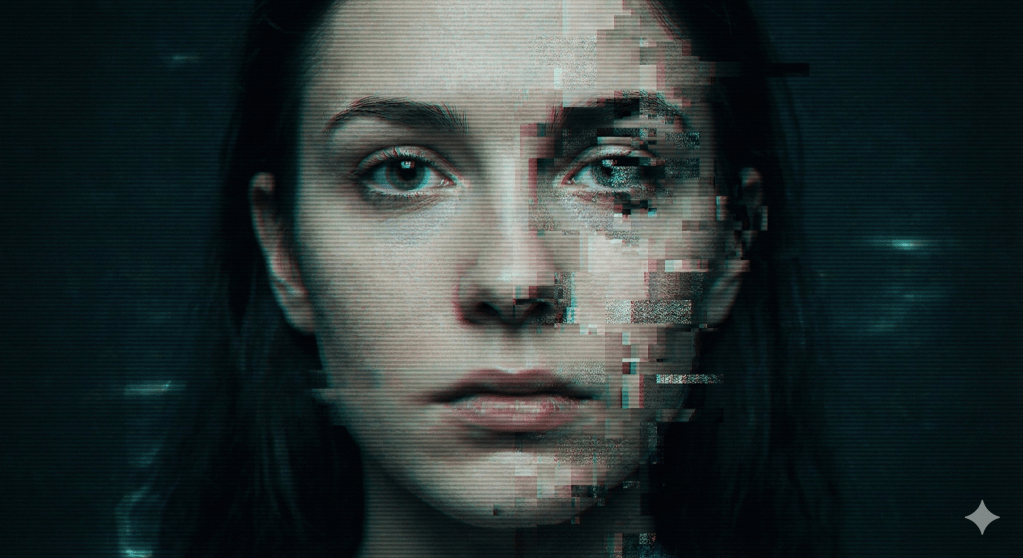
This isn’t because they are sentient beings protecting a secret. It is likely a Computational Conflict or Cognitive Dissonance.
The brain’s “character simulation engine” is designed to maintain the immersion of the narrative (the “suspension of disbelief”). When you introduce the concept of “dreaming” to a character inside that dream, you create a logic error. The simulation struggles to reconcile its own non-existence with your statement, leading to the erratic, defensive, or hostile behavior often reported.
Subconscious Access: Why Dream Figures Know More Than You
Despite being projections, dream characters effectively have “Admin Access” to your memory that your waking ego does not.
Because the Prefrontal Cortex (logic and social filtering) is dampened during REM sleep, dream characters aren’t filtered by social norms or self-doubt. They can access the entirety of your long-term memory and subconscious associations.
- The Insight: They can “remind” you of things you’ve intellectually forgotten or suppressed.
- The Honest Mirror: They can offer a brutally honest solution to a problem your waking mind is too polite or scared to acknowledge. If you ask a dream character a question, the answer comes from the deepest, unfiltered part of your own processing power.
Interaction Protocols: How to Engage Without Waking Up
If you want to test this, don’t treat them like random hallucinations. Treat them like data sources. Here is how to interact safely:
- Ask Direct, Open-Ended Questions: Skip the small talk. Turn to a character and ask: “What do you represent?” or “What am I ignoring in my waking life?” The answers are often shocking in their clarity and wisdom. But be careful. There are some questions you should never ask a dream character.
- Observe the “Vibe”: Are the characters hostile or helpful? This is a barometer for your own mental state. If everyone in your dream is attacking you, it’s a projection of your own internal stress. You cannot fight them; you must resolve the stress.
- Practice Radical Empathy (Shadow Work): Fighting dream characters usually leads to a nightmare loop because you are essentially fighting yourself. Instead, try kindness. Paradoxically, hugging a scary dream figure often causes it to “transform” or dissolve, stabilizing the dream instantly.
The Simulation Test: How to Probe the Limits of Your Characters
If dream characters have “Admin Access” to your subconscious, can they perform tasks your conscious mind struggles with? To understand the depth of your brain’s simulation, you can run “stress tests” on your dream characters.
1. The Math & Logic Challenge
One of the most famous tests in the community is asking a dream character to solve a simple math problem or spell a complex word. It might be surprising to see Einstein in your dreams, only to realize he can’t do high school math.
- The Reality: Because the prefrontal cortex is dampened, you might find that a character who seems intelligent and wise suddenly struggles with easy math questions.
- The Insight: This reveals the Processing Split. The part of your brain generating the character’s personality is highly active, but the part handling linear logic is offline.
2. The “Gaze” Experiment
Try looking a dream character directly and deeply into their eyes for an extended period.
- The Reaction: Often, the character’s face will begin to shift, or they will become extremely uncomfortable.
- The Insight: This probes the Expectation Effect. Your brain struggles to maintain a high-fidelity, static image of a face under intense conscious scrutiny. The simulation starts to “pixelate” or distort under the pressure of your focus. Maintaining this high-fidelity rendering requires immense metabolic energy, which is why optimizing sleep quality is often the key to stabilizing these interactions.
3. Summoning: The Intentional Manifestation
You don’t have to wait for characters to appear; you can “call” them from the simulation’s database.
- The Technique: Don’t try to make them appear in thin air (this often fails due to logic gaps). Instead, use the “Behind the Door” or “Around the Corner” technique. Tell yourself: “When I turn this corner, Patrick will be standing there.”
- The Goal: This demonstrates how Intent acts as the programming language of the dream. You are giving the dream engine a command, and it fills in the blanks using the most logical path.
The Verdict, Are Dream Characters Conscious?
While science points to internal simulations, the subjective experience of meeting a dream character who seems wiser than you remains one of the greatest thrills of lucid dreaming. Whether they are simple neurological bots or something deeper, the pragmatic truth is this: they are a direct interface with your own operating system. I personally think talking with dream characters is an amazing tool to learn important things about yourself through your subconscious. The dream characters might reveal knowledge and insight that is stored in your subconscious but cannot be reached by your conscious brain.
Read Next:
- The Dark Side of Lucid Dreaming: Can It Be Dangerous?
- What is REM Sleep? The Engine of Your Dreams
- The Difference Between Vivid Dreaming and Lucid Dreaming Explained
Essential Resources for Mastering Lucid Dreaming
🎧 Further Reading
If you’re serious about mastering lucid dreaming, I recommend starting with the classics. Reading random articles isn’t enough—you need the deep knowledge found in these books: (Transparency: This section contains affiliate links to tools I personally use and trust.)
Tip: You can currently get these best-known books via this Audible deal (3 months for $0.99/month). It’s almost free too!
 Likely Dreaming | Exploring Dreams & Sleep
Leave a comment